
I am Professor and Chair of Sociology at Oberlin College and Conservatory and member of the Gender, Sexuality, and Feminist Studies Program. I teach courses on cities, sexuality, and inequality, informed by my research about LGBTQ+ communities, gentrification, and sex work. My CV is here.
I’m currently investigating how LGBTQ+ people gather in megacities around the world. Recently I wrote a book about changes in gay bars in the United States over the last 25 years from Redwood Press, Who Needs Gay Bars? I have published on the topic in venues like the Washington Post, Slate, LitHub, Urban Studies, Socius, and Gender Place & Culture.
Previously I published a book on prostitution politics in the European Union, and I went viral once for a blog post about artificial intelligence and gayface.
I grew up in a small town in the Pacific Northwest and earned degrees at The University of California, Berkeley; Oxford University; and The George Washington University. I live in small-town Northeast Ohio with my demon-sized chihuahua mutt.
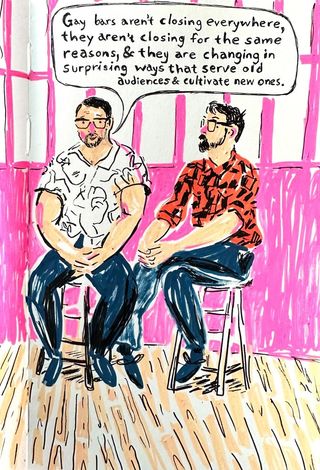
I can be reached at greggor.mattson [at] gmail.com or:
Recent updates:
- WNGB? wins Gold Medal in the IPPY Awards
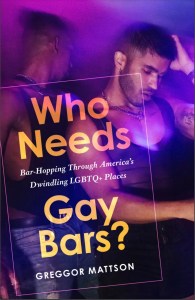 Who Needs Gay Bars? was awarded the IPPY Gold Medal for LGBTQ+ academic non-fiction in June 2024. The IPPY awards were established in 1996 to recognize excellence in independent publishing. 2024 medalists are the “book projects our judges found the most heartfelt, unique, and experimental among all the entries.”
 - Gay bar writingsSince 2015 I have been writing on the role of gay bars in urban processes including gentrification, LGBTQ+ community development, and social inequality. This forms the basis of my forthcoming book with Redwood Press, Who Needs Gay Bars? It is based on interviews with more than 130 gay bar owners and managers, site visits to… Read more: Gay bar writings
- Washington Post
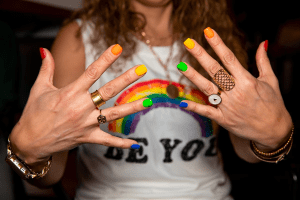 From a piece I wrote for The Washington Post’s Made by History column: “Gay bars are disappearing. Their past holds keys to their future.” Gay bars are often assumed to be relatively common places by, and exclusively for, LGBTQ+ people, but that is a mid-20th-century invention. Today, as debates continue to surface about the need… Read more: Washington Post
 Greggor Mattson